


18 Best Redbubble alternatives for Print on Demand in 2026
February 28, 2026 | by deven.khatri@gmail.com

2. Printify
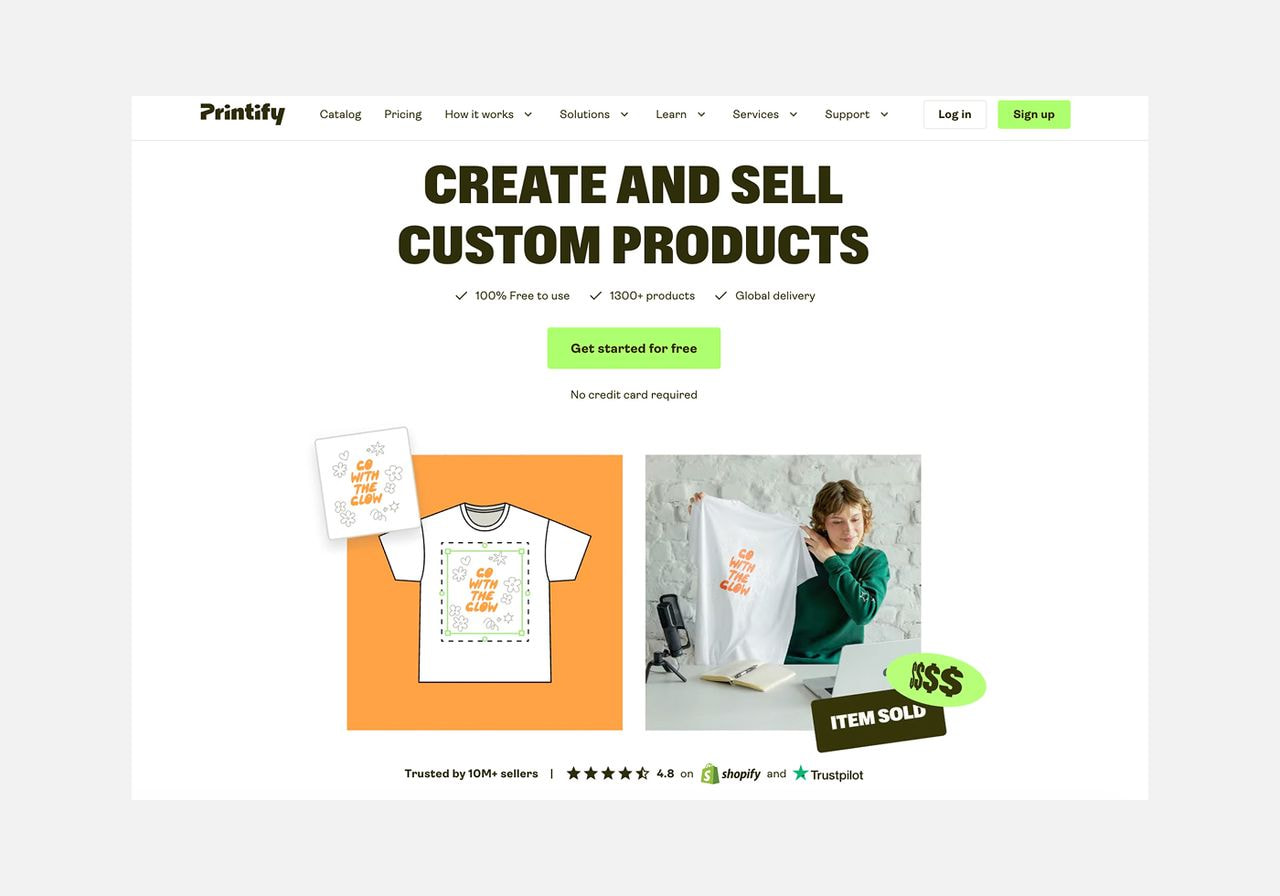
Best for: More product variety and supplier flexibility
As one of the most recognized alternatives to Redbubble, Printify stands out for its broad range of print-on-demand items. It offers over 1,300 custom products across apparel, accessories, home decor, and more.
With a global network of Print Providers, sellers can choose from independent production partners based on pricing, print quality, location, and shipping speed – or let Printify pick one for you.
This flexibility makes it easier to compare print-on-demand suppliers and choose the one that fits your budget and shipping needs.
Fees and pricing
Free to sign up – only pay the base product cost and shipping when someone makes a purchase. An optional $39/month Printify Premium subscription offers discounted products.
Pros
-
Extensive product range with 1,300+ items
-
Trends tool to identify popular designs and aesthetics
-
If you don’t have a personalized storefront, you can sell through a Printify Pop-Up Store
Cons
Read more: Printify alternatives for your print-on-demand needs
3. Amazon Merch on Demand
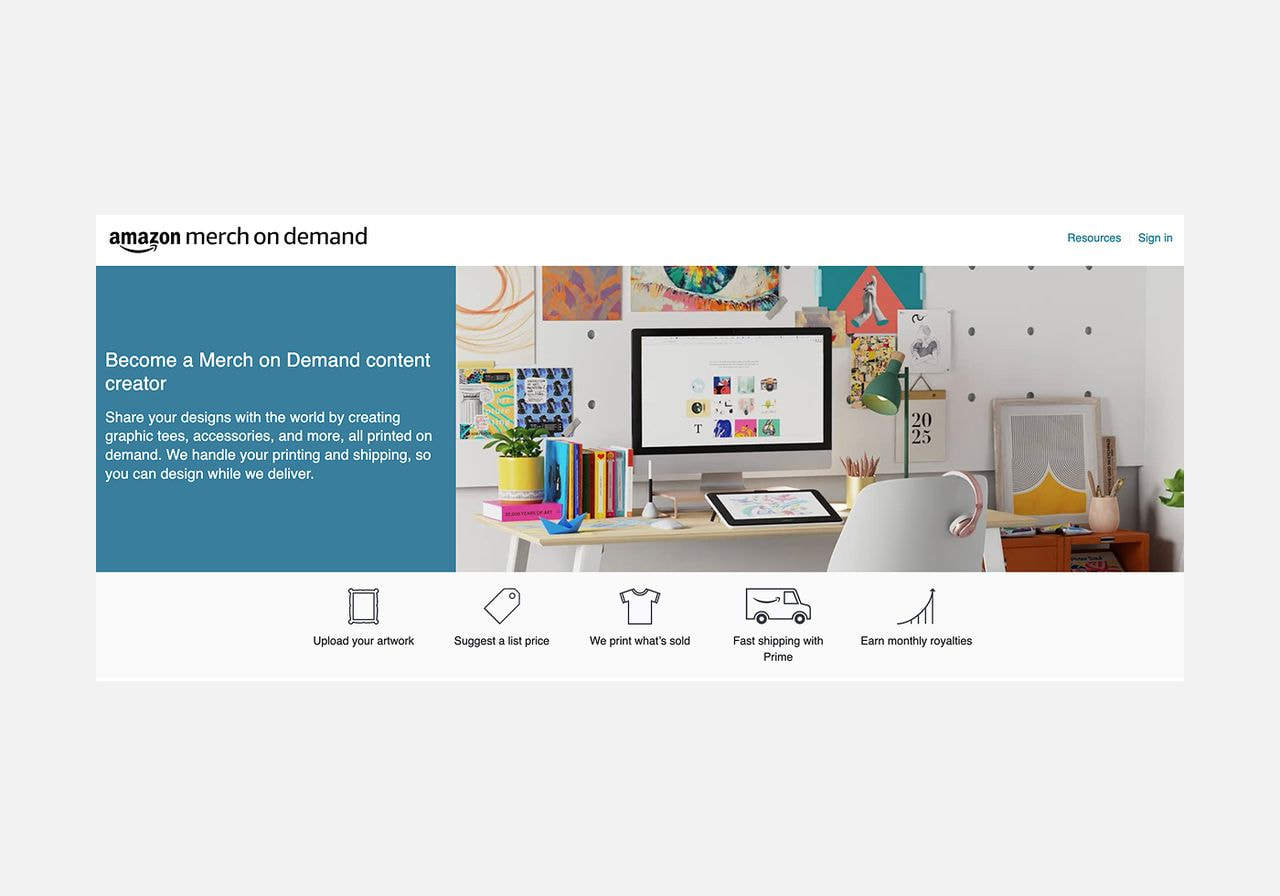
Best for: Selling to Amazon’s massive built-in audience
With this Redbubble alternative, you can sell designs directly on Amazon through its merch-on-demand service, gaining exposure to customers worldwide. The online marketplace handles production, fulfillment, customer service, and shipping.
Fees and pricing
No upfront fees. Merchants earn royalties based on their chosen selling price minus the base production costs and Amazon fees.
Pros
-
Massive built-in traffic from Amazon’s global marketplace
-
Prime shipping eligibility to increase buyer trust and conversions
-
Built-in analytics tools for tracking sales performance
Cons
-
Initial approval is required, and applications may be rejected
-
Limited product range compared to other print-on-demand platforms
-
Royalty-based earnings that can restrict profit margins
Read more: Is selling on Amazon worth it?
4. Saatchi Art
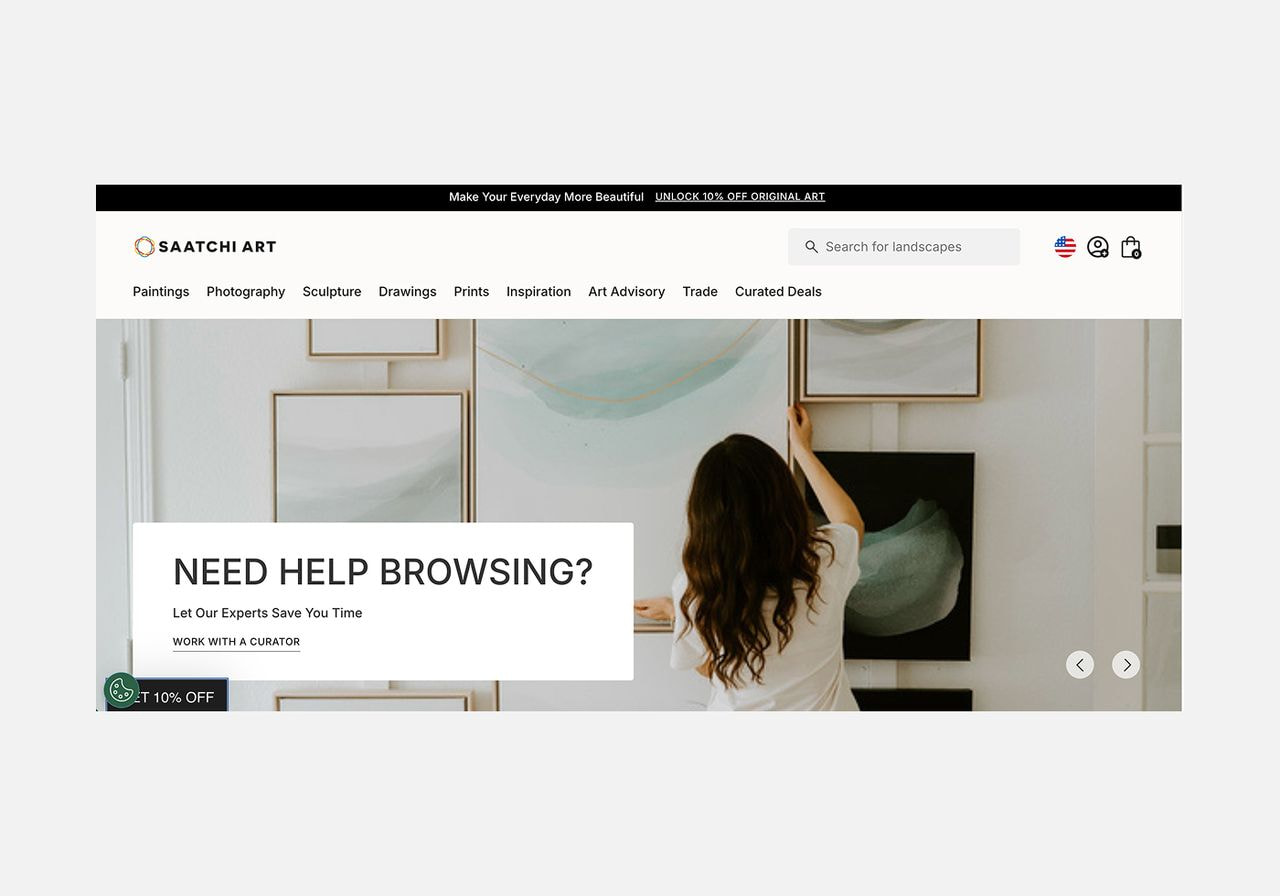
Best for: Talented artists selling premium art prints
Saatchi Art is one of the best places for artists to sell their work to collectors. It offers a print-on-demand service for artists who want to sell open edition versions of their original artwork.
Simply upload a high-resolution image, choose the print size and material, and set a price. Saatchi Art prints and ships the order directly to the buyer.
Fees and pricing
Free to join with no upfront fees. Artists earn 60% of the profit from each print sale.
Pros
-
Designed specifically as Print on Demand for artists
-
Access to a global collector audience
-
Non-exclusive agreement, letting you make money from your art on other platforms
Cons
-
Limited to wall art and original artwork
-
Less suited for high-volume merchandise sales
-
A formal application process with identity verification
5. Zazzle
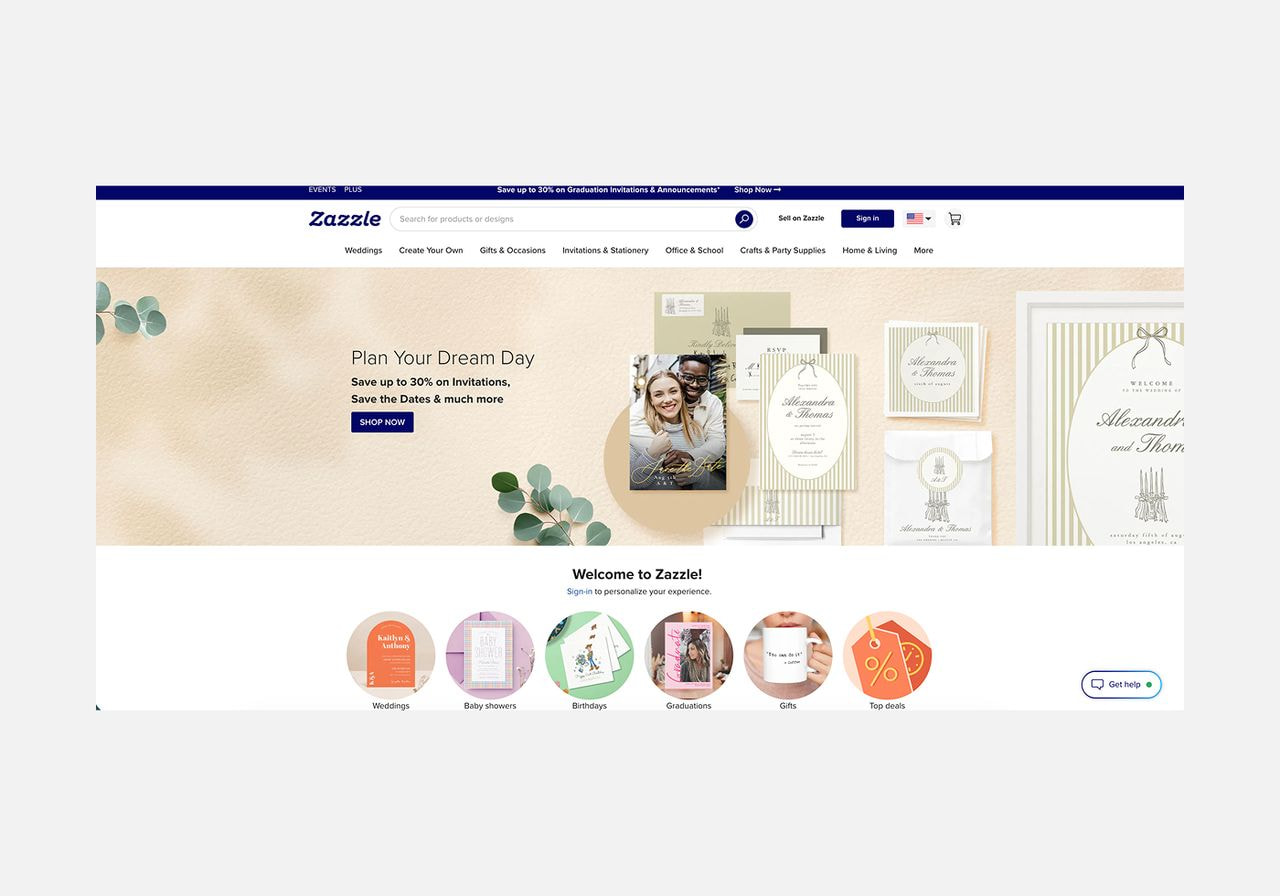
Best for: Selling stationery and event-driven products
If you’re looking for companies like Redbubble with a stronger focus on paper-based products, Zazzle is a solid option.
Although it offers apparel and home items, this print-on-demand marketplace is particularly well known for invitations, greeting cards, business stationery, and party decor.
Fees and pricing
No upfront costs. Sellers can set a royalty percentage – between 5% and 50% for physical products and up to 99% for digital downloads – which is then added to the base cost to determine the final price.
When a product sells, you keep the royalty amount.
Pros
-
Event-driven audience – high potential for bulk orders
-
Flexible royalty rates
-
Boost income through referral earnings
Cons
-
More niche, event-focused audience compared to other online marketplaces
-
No custom branding or packaging control
-
Most items are produced in the US – international shipping might be costly
6. Fine Art America
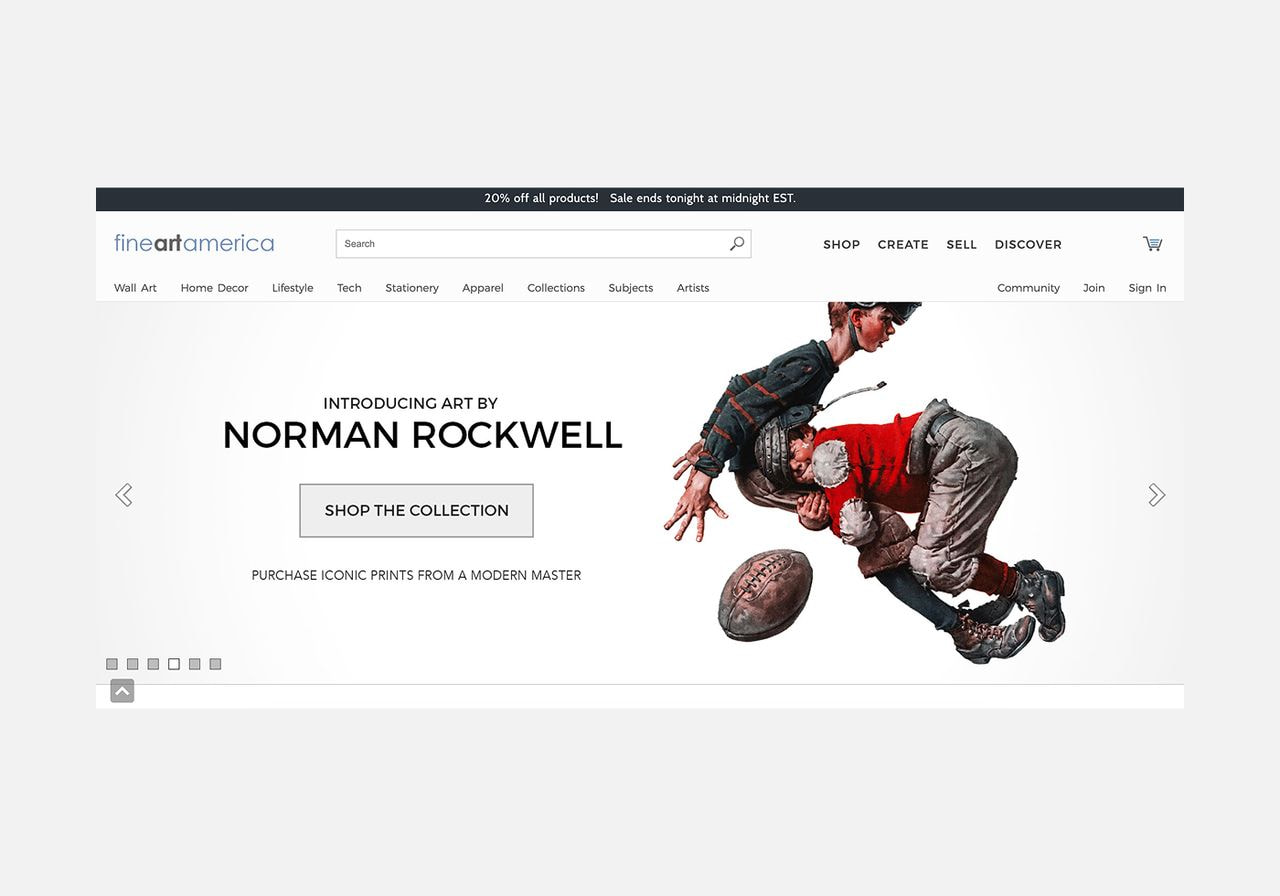
Best for: Independent artists selling their work across multiple product types
Fine Art America is one of the best print-on-demand sites for visual artists and photographers. While this Redbubble alternative is known for canvas and framed prints, it also lets you sell designs on apparel, home decor, phone cases, and other personalized products.
Sellers can list their work on the marketplace or connect to their own eCommerce website.
Fees and pricing
No upfront costs. Simply set a markup above the base cost, and the difference becomes your earnings. Premium membership costs $30/year and unlocks additional marketing features.
Pros
-
Strong art-focused community
-
Multiple US-based fulfillment centers with international production partners
-
Built-in analytics and marketing tools
Cons
-
Selling through your own website requires a premium plan unless using Shopify or BigCommerce
-
Smaller audience compared to Redbubble
-
No direct integrations with larger marketplaces like Etsy
7. TeePublic
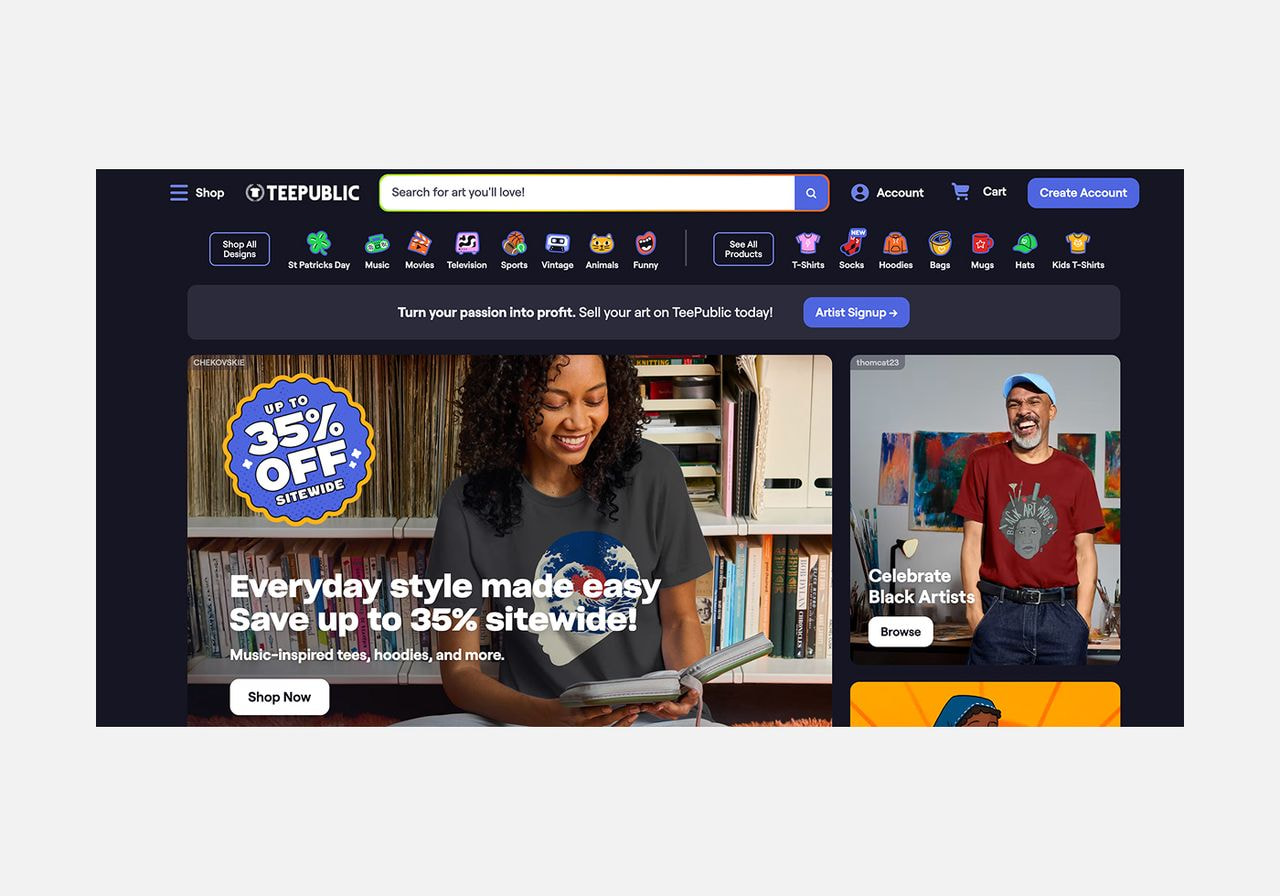
Best for: Pop culture and fan artists
TeePublic is owned by Redbubble, but it has developed its own customer base and continues to grow in popularity. The marketplace offers over 75 print-on-demand products, including custom t-shirts, hoodies, stickers, phone cases, mugs, and throw pillows.
The platform’s Fan Art Program allows artists to submit officially licensed artwork for participating brands. This lets independent creators work with recognizable franchises while reaching a wider audience.
Fees and pricing
No upfront costs. On the TeePublic marketplace, earnings are fixed per product. For example, most apparel items earn you $4 per sale at regular price and $2 during sitewide sales.
Pros
-
Redbubble importer to migrate designs instantly
-
Free tool to create a branded merch website and set higher prices
-
Production handled by vetted third-party fulfillment centers in the US, UK, and Australia
Cons
-
Lower artist profit margins due to limited pricing control
-
Fewer printing techniques than some other print-on-demand platforms
-
Limited shipping availability
8. Gelato
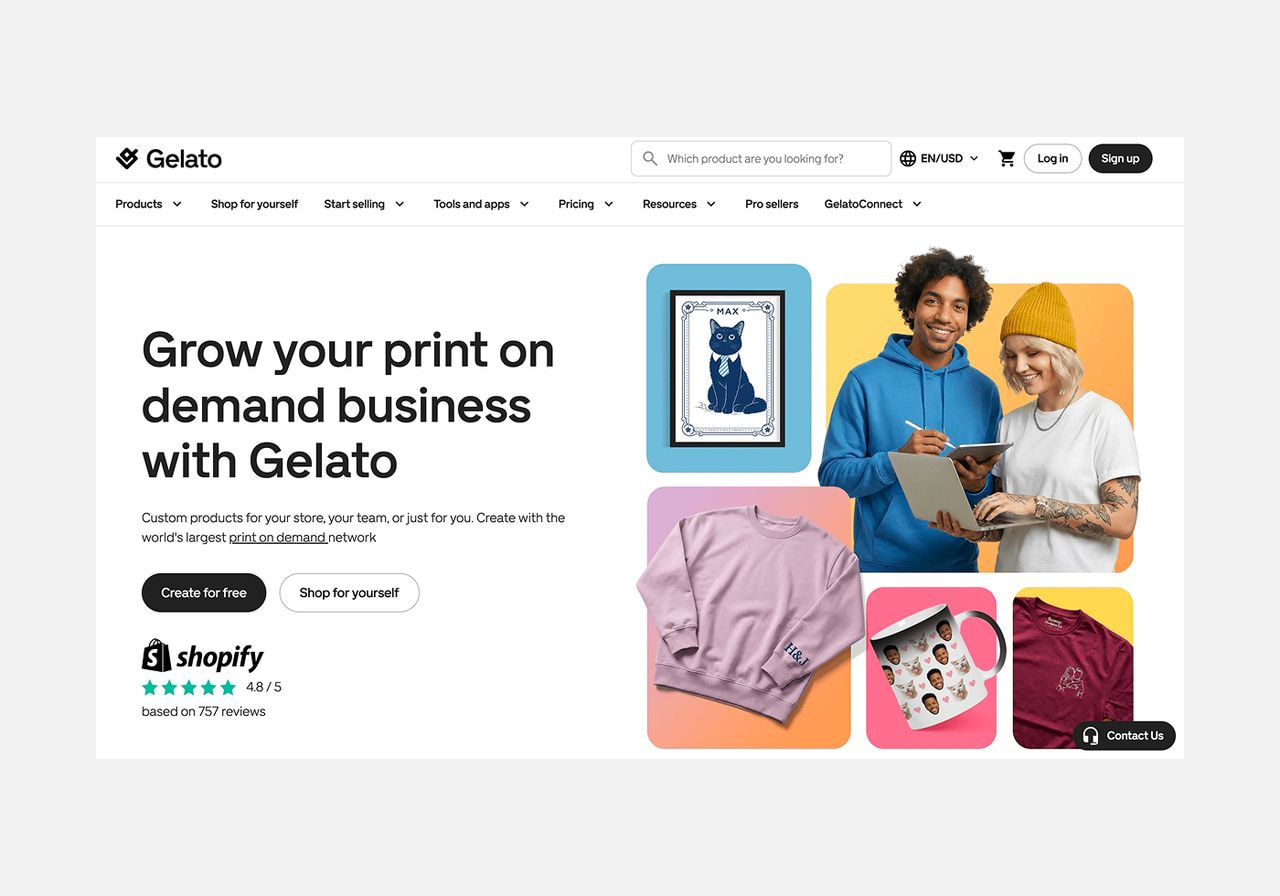
Best for: Selling internationally with local fulfillment
Gelato is a print-on-demand platform that connects sellers with more than 140 local production partners across 30 countries. When someone places an order, Gelato automatically routes it to a nearby partner for printing and shipping.
Fees and pricing
No upfront fees on the free plan – only pay when a product sells. Upgrade to the $23.99/month Gelato+ paid subscription to get product discounts and branded packaging options.
Pros
-
Local production model to reduce delivery times and costs
-
Integrations with popular eCommerce platforms
-
Automatic order routing to the closest production partner
Cons
-
Branding options are available only on paid plans
-
No in-house printing, so quality may vary between production partners
-
Certain design features require a subscription
Read more: Best Gelato alternatives for your business
9. Sellfy
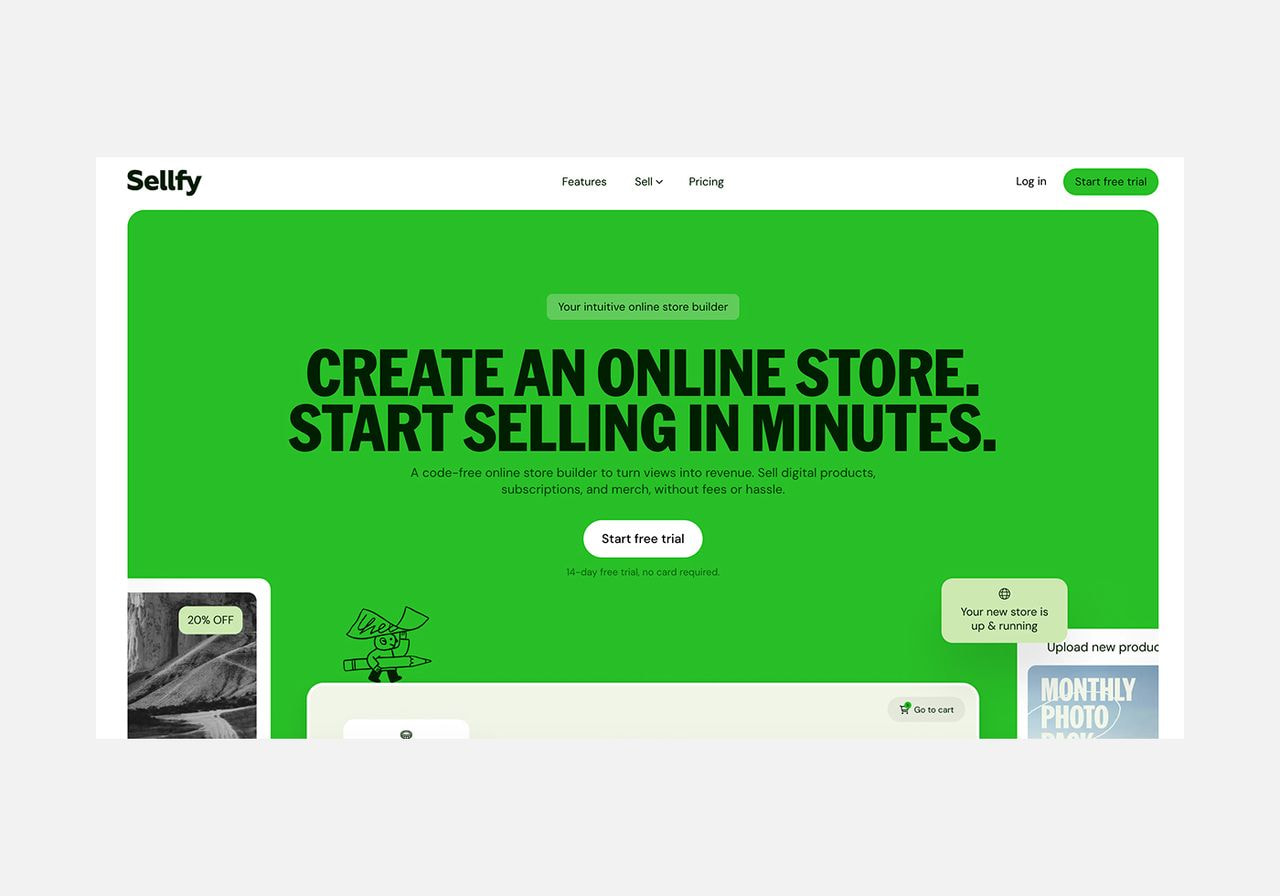
Best for: Creating an online store with built-in print-on-demand functionality
If you’re looking for sites like Redbubble but want more control over your storefront, Sellfy is worth considering. It lets anyone build a fully branded online store and sell print-on-demand products from the same platform.
Offer custom merchandise like t-shirts, hoodies, mugs, posters, and other best-selling products – alongside digital downloads such as eBooks, presets, music, or design files.
Fees and pricing
Plans start at $22/month, and sellers set their own markup and product prices. When a customer orders, Sellfy charges you the production and shipping costs.
Pros
-
Supports physical print-on-demand products and digital downloads
-
Streamlined selling process with store setup and fulfillment in one place
-
Built-in marketing features like email campaigns and discount codes
Cons
-
Limited production facilities compared to bigger print-on-demand companies
-
No direct integrations with online marketplaces like Etsy or Amazon
-
Annual sales volume limit on each plan – exceeding it means you need to upgrade your subscription
10. Spring
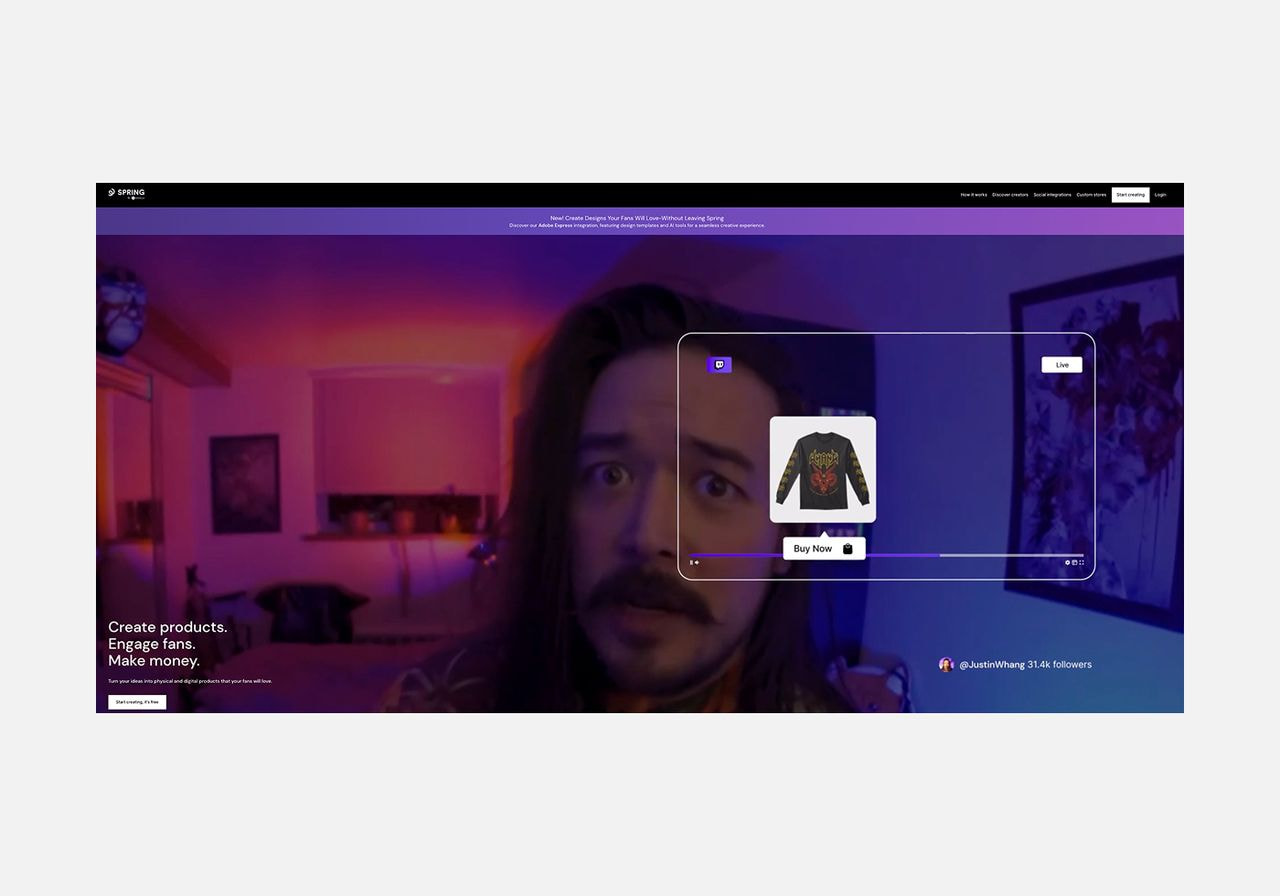
Best for: Social media content creators
Formerly known as Teespring, Spring helps YouTubers, TikTok influencers, Twitch streamers, and Discord communities launch and promote their merch. Creators can sell custom products through the built-in marketplace, a custom-branded storefront, or social media integrations.
Sell apparel, drinkware, athletic wear, accessories, stationery, and even pet products – all printed on demand and fulfilled through Spring’s partner network in the US, EU, Mexico, India, and Australia.
Fees and pricing
No upfront costs. Merchants set their own sale price for each product. Spring charges a base price to cover production and fulfillment.
Pros
-
Sell on multiple platforms – the Teespring marketplace, your own website, or social media
-
Boosted Network feature to market your products through paid promotion
-
Option to donate a portion of the profits to charities
Cons
-
Limited printing techniques compared to some POD providers
-
Higher base prices than certain Redbubble competitors
-
Storefront customization is not as advanced as full eCommerce platforms
RELATED POSTS
View all


20 Top AI SEO tools (2026): Supercharge your Printful store
December 21, 2025 | by deven.khatri@gmail.com
Shopify product creation with Printful’s Embedded Maker
January 8, 2026 | by deven.khatri@gmail.com

9 Best heavyweight t-shirts for printing on demand
January 17, 2026 | by deven.khatri@gmail.com