


Print-on-demand statistics in 2026: Market data + insights
January 14, 2026 | by deven.khatri@gmail.com

1. The global print-on-demand market is growing at a 26% compound annual growth rate (CAGR)
POD isn’t slowing down – it’s picking up speed.
The global print-on-demand market size is currently valued at $12.96 billion and is projected to climb to $102.99 billion by 2034. That equals a 26% CAGR, putting POD among the fastest-growing segments of the eCommerce landscape.

Source: Precedence Research
This growth comes from a simple shift in consumer behavior. Buyers want personalized and unique products, faster delivery, and less waste. Print on Demand checks all three boxes.
Products are only made after a sale, which means lower upfront costs, no leftover inventory, and far less guesswork compared to traditional manufacturing.
What this means for you: For sellers, POD makes it easier to test ideas and follow trends while growing an online business. As the print-on-demand market expands, brands that launch quickly, stay consistent, and respond to customer preferences will gain a competitive edge.
2. North America leads the global POD market
North America holds the largest share of the print-on-demand market, accounting for 36% of the global total. The region benefits from a strong eCommerce infrastructure, high online shopping adoption, and close proximity to fulfillment and production facilities.
Many established print-on-demand services, including Printful, operate in North America, which helps sellers deliver faster shipping and more consistent product quality.
For merchants selling to a US-based audience, this regional strength translates into smoother fulfillment and a better customer experience.
While North America leads today, other regions are gaining momentum. Asia-Pacific is projected to grow the fastest, with a 24.8% POD industry growth rate – driven by rising internet access, mobile shopping, and broader eCommerce adoption.
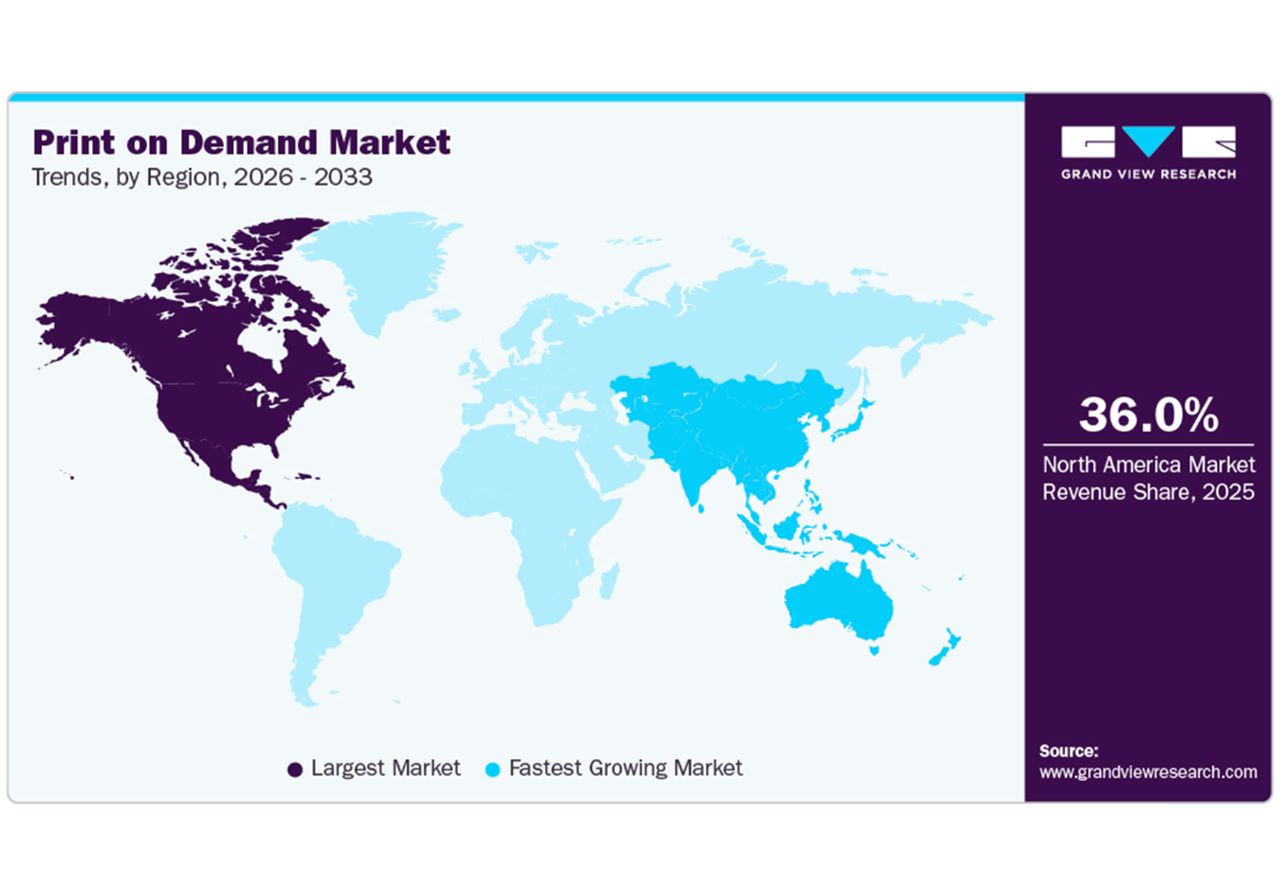
Source: Grand View Research
What this means for you: Working with print-on-demand platforms that offer a global production network helps you fulfill orders closer to your customers – helping to fuel faster growth.
Learn more: Is Print on Demand profitable?
3. In the US, growing demand for personalized products is driving the POD market
The US personalized gifting market was valued at $9.69 billion and is projected to reach $14.56 billion by 2030, growing at a 7% CAGR.
Categories like custom clothing, home decor, wall art, and personalized t-shirts are driving this significant growth. Consumer interest continues to shift toward more meaningful, custom products that feel personal rather than mass-produced.
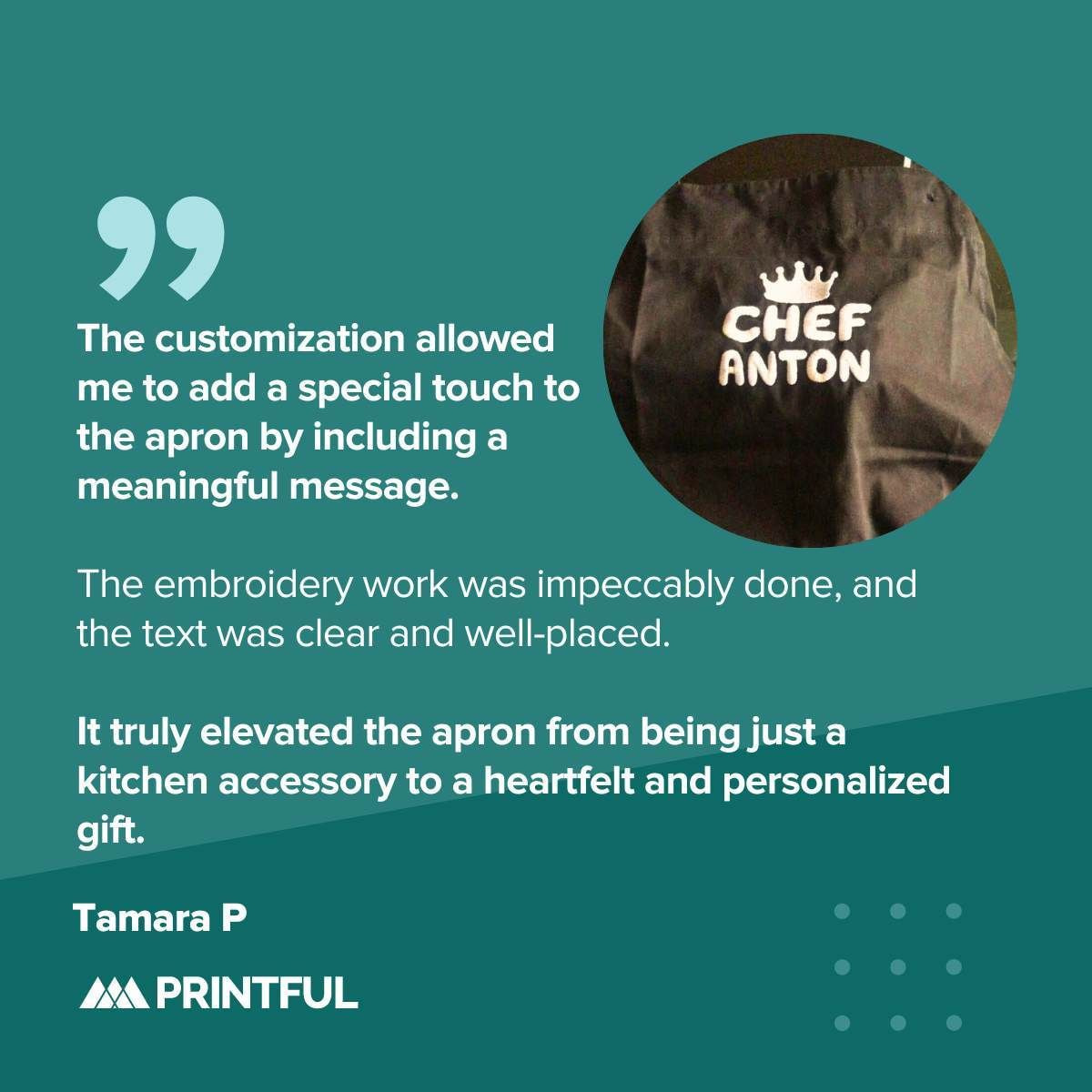
Source: Printful
Unique and personalized products work especially well for seasonal events. Buyers gravitate toward items that feel thoughtful, expressive, and made for specific moments – from holidays to everyday gifting.
This shift favors print-on-demand services, where products are made to order, and customization doesn’t require bulk production or upfront inventory.
What this means for you: Personalized gifts sell. With Printful, you can take advantage of these print-on-demand statistics by letting customers add names, initials, or special messages to your products.
Learn more: Customized product examples: Going beyond the ordinary
4. 80% of consumers say they’re willing to spend more for sustainable products
And just how much more? On average, consumers are ready to spend 9.7% more on eco-friendly products.
Sustainability trends go hand in hand with the print-on-demand model. Since products are made only after an order is placed, POD avoids overproduction and excess inventory. This is a sharp contrast to fast fashion and traditional manufacturing.
Fewer unsold items mean less waste, making POD a more sustainable option for brands looking to align with rising consumer demand.

Source: Printful
What this means for you: If applicable, use sustainable Print on Demand as part of your brand story to show customers how your products are made more responsibly.
Valuable read: What is sustainable fashion, and can I dress cool while the earth is on fire?
5. Sustainable clothing is on track to become a $24.99 billion global market by 2035
Globally, the sustainable clothing segment is valued at $10.09 billion and is projected to reach $24.99 billion by 2035, growing at a 9.49% CAGR.
Shoppers also favor eco-conscious apparel they can use regularly, with shirts, leggings, yoga pants, and shorts leading demand for everyday wear.
With large fashion brands looking the other way, these print-on-demand statistics signal that now’s a great time to revisit your marketing messaging and see how it can cater to this growing audience.
What this means for you: Sustainable clothing is here to stay. With Printful, you can filter products by eco-friendliness, making it easier to cater to evolving consumer preferences.
6. The average monthly search volume for “Print on Demand” is 132.7K searches

Source: Semrush
Every month, the keyword “Print on Demand” is Googled 132,700 times worldwide. Since the US is the biggest print-on-demand market, it’s also where people search for it the most – 33,100 times a month.
This signals a rising interest in on-demand fulfillment methods as demand shifts toward faster and more adaptable eCommerce models.
7. Apparel, home decor, drinkware, and accessories lead POD product trends
Year after year, apparel leads print-on-demand sales. POD helps online sellers adapt to emerging trends – from popular designs and patterns to color schemes – without the high cost of mass production.
Home decor is another top-selling category, with a projected 28% CAGR through 2034. As more shoppers personalize their living spaces, made-to-order items like wall art, posters, cushions, and home accessories continue to gain traction.
What this means for you: Focusing on proven categories like apparel and home decor gives your store a strong foundation. From there, drinkware and accessories offer room to experiment with designs, bundles, and seasonal drops without increasing complexity.
Check out our customer Millian Couture, who started a clothing brand and made their debut in New York Fashion Week with print-on-demand products:
RELATED POSTS
View all


Best Styling Tips To Flatter An Inverted Triangle Body Shape
November 11, 2025 | by deven.khatri@gmail.com

Top tools to start a personalized gift store (2025 guide)
November 21, 2025 | by deven.khatri@gmail.com