How to start an eCommerce business without money in 2025
October 23, 2025 | by deven.khatri@gmail.com

How to start an eCommerce business without money in 8 steps
You don’t need capital to start your own eCommerce business. Free platforms, hands-off business models, and organic marketing channels make it possible to launch, grow, and sell – without spending upfront.
Here’s how to start your online business in 8 clear steps.
1. Choose a low-cost business model
The first step to figuring out how to start an online store with no money is to pick a business model with low startup costs. The right model lets you launch without inventory, rent, or capital – just an internet connection and a clear offer.
Here are the top ways to sell products online for small business owners:
POD lets you sell custom products (apparel, home goods, accessories) under your brand without holding inventory. You design the products, and your POD partner handles printing, packing, and shipping after each sale. First, you need to choose a print provider you’ll work with.

Read more: 15 Best print-on-demand companies for your business
Second, set up a store on an eCommerce platform or marketplace and connect it to your print-on-demand provider. Once set up, orders are fulfilled automatically, so you can focus on marketing and growth.
If you partner with a white-label company like Printful, your customers will only see your brand – not your supplier’s. You’ll get access to 443 products, from custom hoodies and t-shirts to accessories, mugs, and wall art. All items are printed and shipped under your label.
POD is a kind of dropshipping that allows you to customize the products you sell.
You can start a clothing line and sell custom hoodies, custom t-shirts, joggers, and more.
See how other business owners made it by checking out successful print-on-demand store examples.
Dropshipping is another low-cost business model where a third-party supplier handles production, packaging, and shipping. You don’t need to manage inventory – orders are fulfilled on demand after each purchase.
Unlike POD, most dropshipping products aren’t customizable. But branded dropshipping does exist – it allows you to add packaging, logos, or product inserts for a more cohesive customer experience.
Read more: 15 Profitable dropshipping business ideas to try in 2025
No inventory, no shipping – just pure margins. In this business structure, digital products like eBooks, courses, Notion templates, or design packs are created once and sold repeatedly.

You don’t need to be a designer or coder either. Free tools like Canva, Tella, or Gumroad make it easy to create, package, and sell digital products without spending money upfront. If you have knowledge or skills people want to learn, this is one of the most scalable business models.
If you already have a blog, newsletter, or social following, consider launching a paid membership or digital subscription. Writers, educators, and creators often turn their content into recurring income thanks to their existing online communities.
Affiliate marketers earn by recommending services or other people’s products. You share a custom link, and every time someone buys through it, you get a commission.
Whether you’re writing blog posts, sharing TikToks, or reviewing gear on YouTube, you can build income with only an internet connection and your phone.
Many affiliate programs offer free signups and competitive rates. Printful’s Affiliate Program gives 10% of every referred order. Others to explore: Amazon Associates, ShareASale, Impact, and niche affiliate networks tied to specific industries.
Got a business idea but not the funds to launch it? Sell it before you make it.
With preselling, you test demand and generate income before spending a dollar on production or online advertising. You’ll need a compelling product page, a captivating hook, and a clear delivery timeline.
It’s popular for launching books, brands, and courses without taking on risk. Even big brands like Rare Beauty used presales to build hype and validate demand.
If you’re crafty, whether you crochet, make jewelry, or design stickers, start small and scale over time.

List your handmade products on Etsy or sell directly through social media platforms.
Use short-form video to show your creative process and build trust. Social media posts attract customers and turn followers into buyers – even without paid ads or a full eCommerce website.
Social commerce – selling through livestreams and social platforms – is growing fast. TikTok Shop, Whatnot, Instagram Live, and other social media platforms all let you sell products during livestreams, and conversions are 5-10 times higher than traditional online stores.
This model is perfect if you’re comfortable on camera. All you need is a phone, a product, and some personality. Platforms handle the checkout and shipping for you.
The worldwide social commerce market will reach $1,581.9 billion in 2025 and grow nearly 4 times by 2030.
This business idea combines curation, community, and recurring revenue. You bundle products, either sourced or handmade, and ship them monthly to subscribers.
You don’t need to scale immediately. A small run of themed boxes (think wellness kits, art supplies, or indie snacks) lets you test the market. Use pre-orders to fund your first batch and gather feedback before investing more.
To manage signups, use tools like Subbly or Shopify’s built-in subscriptions.
2. Find products with a high profit margin
The next step in starting an eCommerce business from scratch is finding products. Look for items that cost little to produce or source but can be sold at a strong markup without compromising customer value.
Here’s how to do that:
Don’t guess – use free or low-cost tools like Oberlo, Jungle Scout, or Sell The Trend to spot high-demand, low-competition products. TikTok Creative Center shows trending products in real time, making it easier to catch momentum before it peaks.
Niche products that solve specific problems for a specific audience tend to sell better and support higher markups. Think “custom dog bandanas for large breeds” instead of just “pet accessories.”
White-label products with branding potential let you charge more. POD is ideal here: offer one-of-a-kind designs on clothing, drinkware, or home goods without paying for inventory. Buyers pay more when a product feels unique or tailored to them.
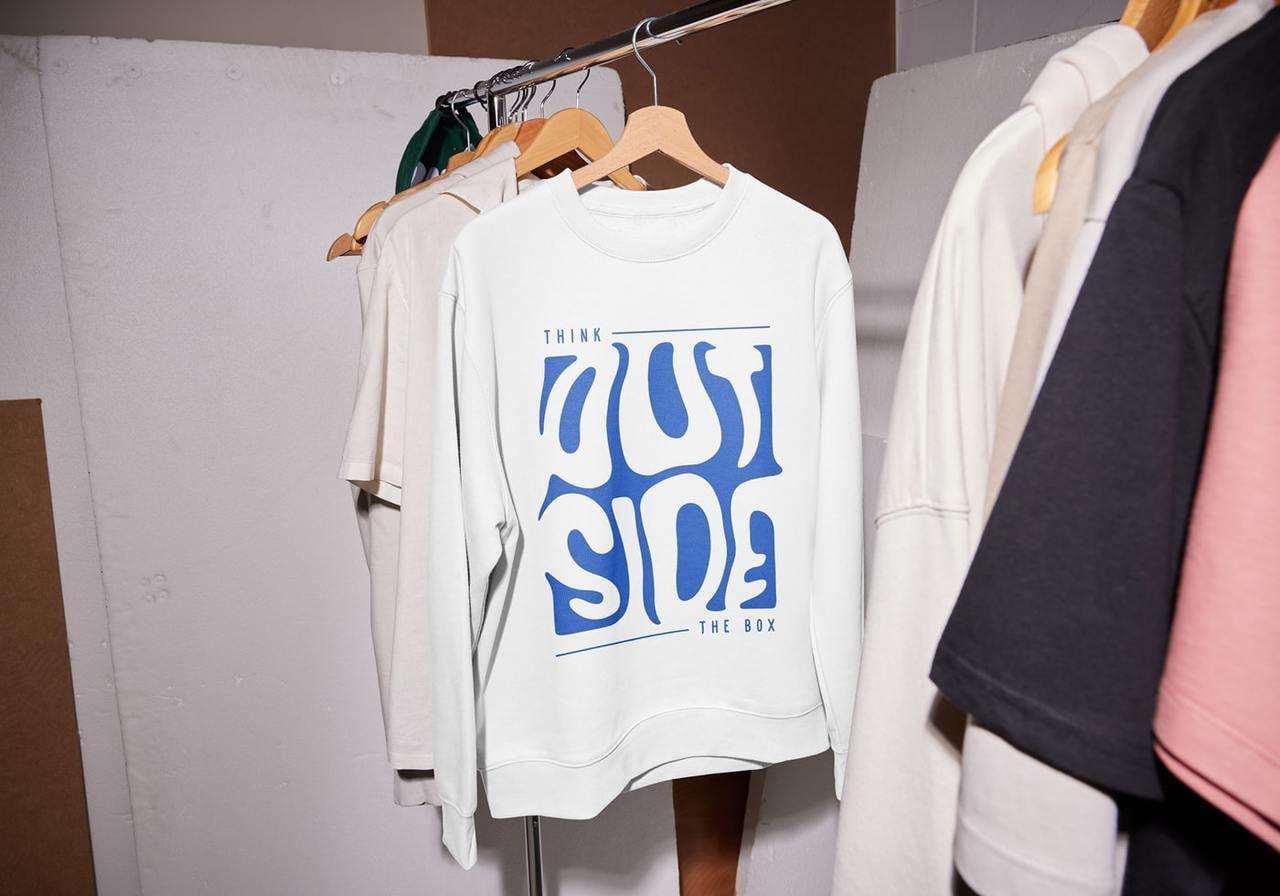
When sourcing products, ensure you partner with a trustworthy manufacturer. Look for consistent quality, fast fulfillment, and branding options like custom labels or packaging. These extras can justify premium pricing, significantly improve your profit margins, and ensure customer satisfaction.
Trending products (like viral TikTok finds) drive fast traffic, but lose momentum just as quickly. If you go all-in on a passing fad, you’ll end up with products no one wants in a month.
Use trends to attract attention, then funnel the potential customers toward stable, higher-margin items. For example, creators like Nadia the Artist blend trend-based collections (like Halloween prints) with timeless bestsellers to keep profit steady year-round. Tools like Google Trends and Pinterest Trends highlight rising demand before it peaks.
Subscription products bring in recurring revenue. Subscriptions to supplements, books, beauty kits, or planners let you sell once and earn monthly.
Margins grow over time because customer acquisition costs go down. Start small with a curated box or digital subscription, and refine it based on feedback and retention.
Bonus tip for dropshippers:
Look for high-margin, lightweight products that ship easily – like LED gadgets, fitness gear, or kitchen tools. These are easier to scale and often come with lower fulfillment costs.
Read more: 11 High profit margin dropshipping products
3. Partner up with a supplier
If you’re building an eCommerce business with no money, your supplier is the engine behind your operations. They’ll handle production, packaging, storage, and shipping, so you can focus on design, marketing, and customer experience.
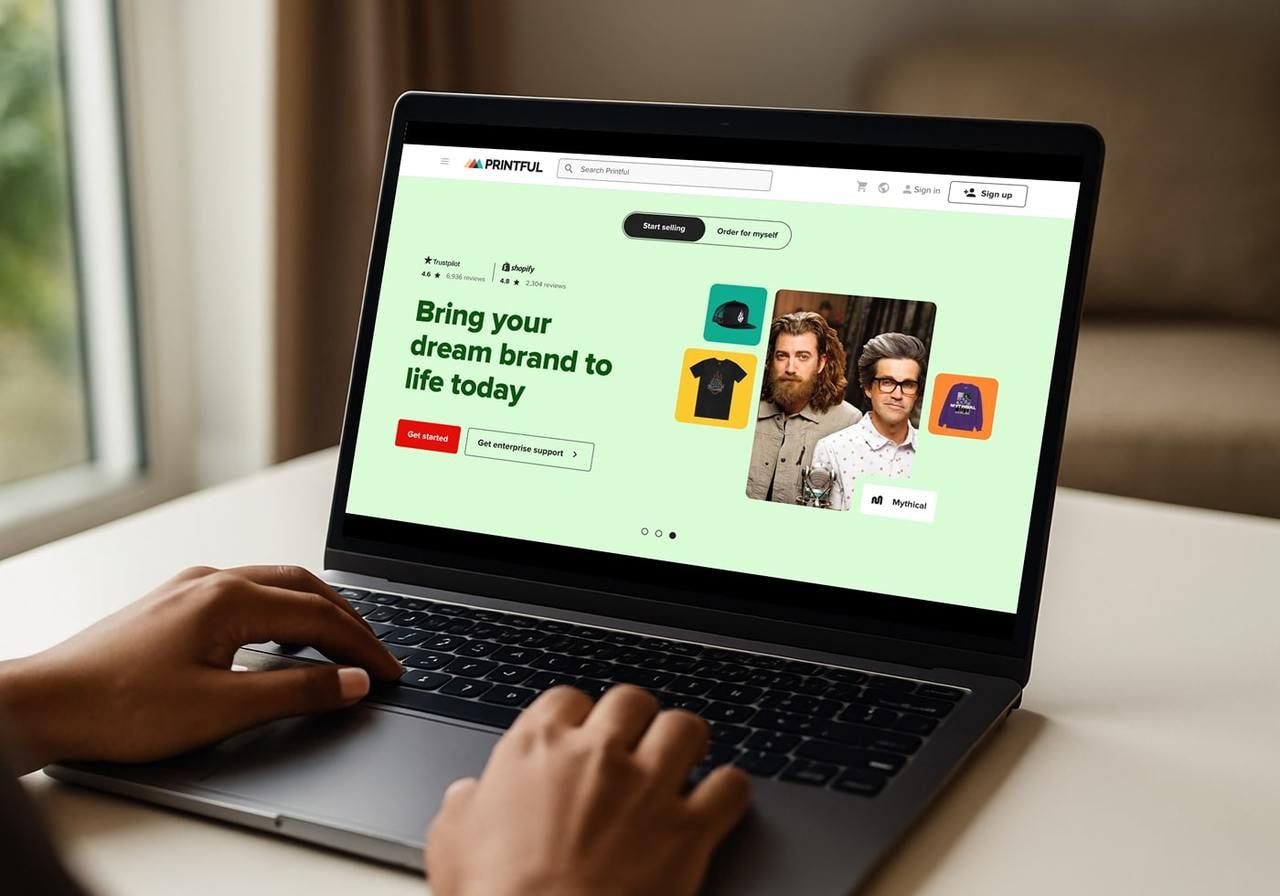
Customers don’t care if you made the product yourself: they care that it arrives on time, looks great, and works as expected. That’s why the right supplier is critical not just for logistics, but for your reputation, repeat sales, and long-term growth.
Consider these points before signing a deal:
-
Quality and product selection. High-quality products build trust with your customers. They result in fewer complaints and higher returns on investment (ROI). Choose a supplier offering a wide selection of trending products and a proven track record of quality. Request samples if possible to check the quality before selling.
-
Shipping price. Over 90% of shoppers say they’re likely to abandon shopping carts if the shipping costs are too high. And a huge emphasis is on reliability, so choose partners that deliver the orders on time. Find out more about Printful’s order fulfillment times.
-
Reputation and transparency. Pick a supplier with verified reviews, clear return policies, and detailed product info. With Printful, you’re choosing the best in the industry, according to over 31 thousand reviews.
-
Location and global reach. Suppliers close to your customers offer faster shipping and lower costs. Look for fulfillment centers in your primary markets to avoid delays and high shipping fees. Printful offers global fulfillment thanks to its facilities and trusted partners worldwide.
-
Support and communication. Good customer support prevents lost sales and stress. Choose suppliers with 24/7 service and fast response times. Test their support before committing.
4. Leverage free tools and resources
Once you’ve chosen your products and supplier, the right free tools will help you run and grow your business without upfront costs.
Use what’s free until your business earns money. Then, reinvest in tools that save time and support long-term growth.
5. Create products
If you’re using POD, this is where your creativity turns into revenue. The right product designs help you stand out, express your brand, and boost perceived value.
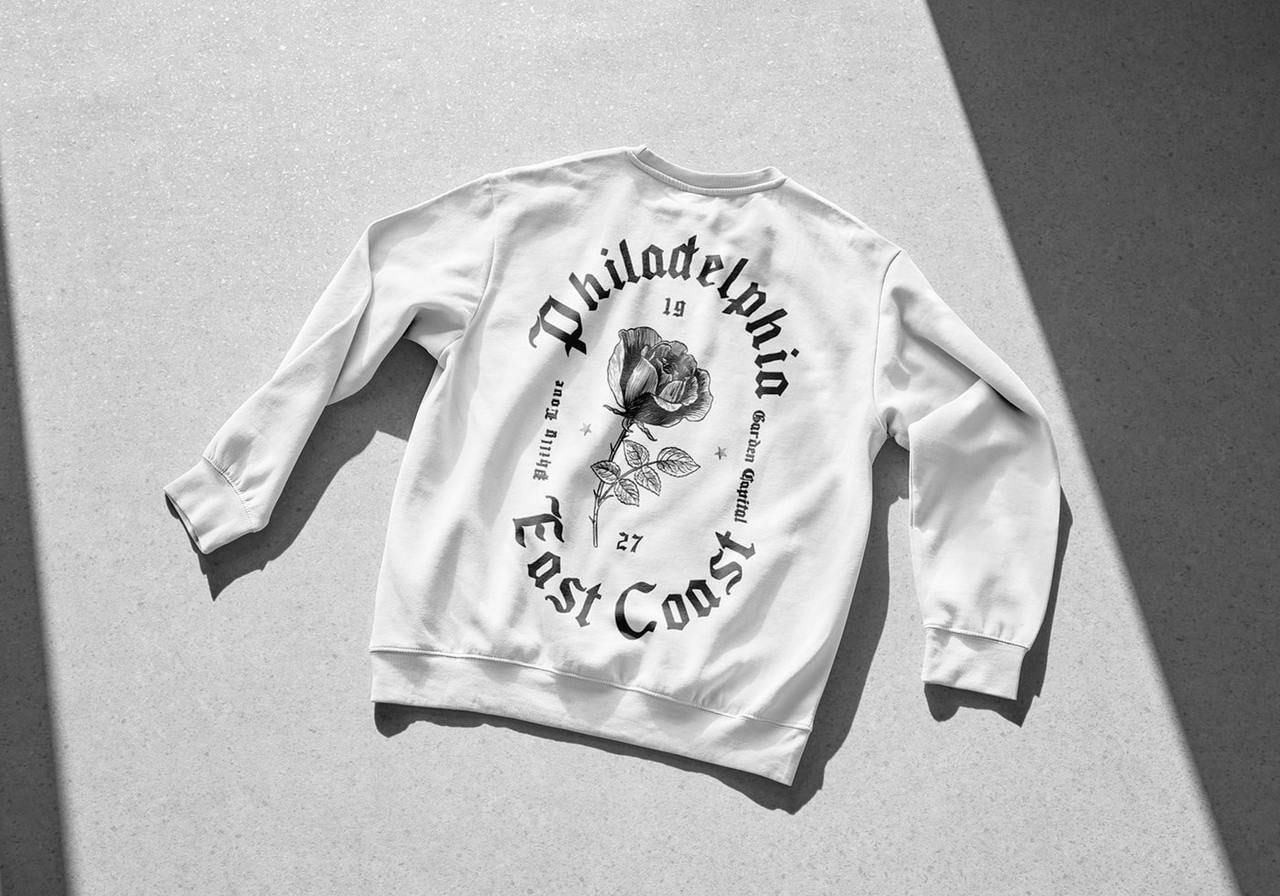
With Printful, you can design 443 products with our free Design Maker. Through the Design Maker, you gain access to:
-
712 fonts
-
Over 300 clipart collections
-
More than 3100 ready-made, customizable designs
-
Over 550 background graphics and 175 colors
Read more: 11 Things you didn’t know Printful’s Design Maker could do
RELATED POSTS
View all


What Is Brand Marketing? How to Build a Lasting Brand That Drives Growth
July 23, 2025 | by deven.khatri@gmail.com